
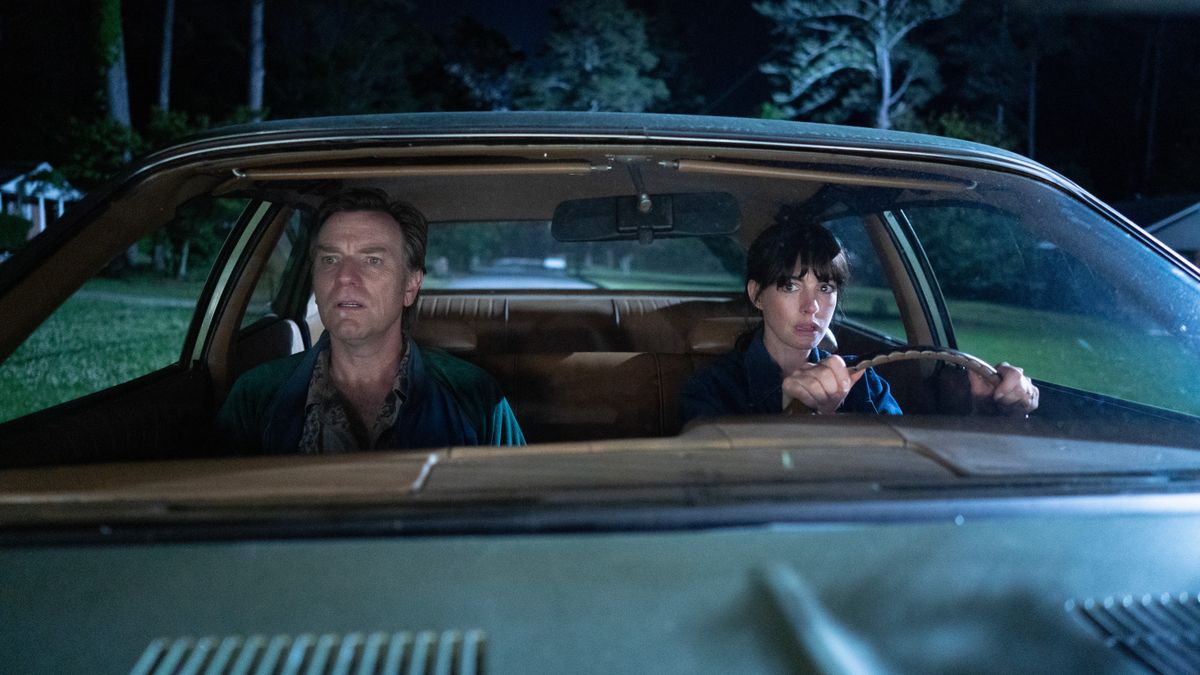
2026 / Dir. David Robert Mitchell
Rating: 4/5
Watch if you like: A madcap blend of 1980s Amblin Entertainment movies; having recurring nightmares where you go to throw out the trash and hear a rustling from the can, thinking it’s a raccoon, but a velociraptor jumps out and bites your face off.
David Robert Mitchell’s career seemed to have hit pause after 2018’s Under the Silver Lake didn’t find an immediate audience the way his breakout It Follows did (although it’s developed a well-deserved cult following in the meantime). Thankfully, he’s been released from “director jail,” and we’re all the better for it. Paying homage to Steven Spielberg’s 1980s films, as well as the broader universe of movies he produced in the same period, like Poltergeist and Gremlins, The End of Oak Street may just be the most fun movie of the summer and certainly the most unique.
Set in the early 1980s, The End of Oak Street puts us back into the feeling of classic summer blockbusters. It’s shot in a bright, warmly grainy style that feels nostalgic for the days of popping in Jaws on the VHS player with a sentimental string score, neighborhood block parties, tough moms and aloof dads, teenage gangs of bullies riding bikes, and the cute new girl who just moved to town. But things aren’t quite alright with the Platt family.
Parents Denise (Anne Hathaway in her fourth major role this year, for those keeping score) and Greg (Ewan McGregor) are unable to communicate or get on the same page about anything, and are clearly headed for divorce. Daughter Audrey (Maisy Stella, My Old Ass) wishes she could follow in astronomer Carl Sagan’s footsteps, but her parents’ money troubles mean college isn’t in her plans. Lastly, the youngest son, Brian (Christian Convery, Frankenstein, Cocaine Bear), is acting out amid the family’s slow disintegration. They also have a goofy CGI dog named Starbuck who enjoys terrorizing their neighbor.
Beyond the breaking of the nuclear family, it seems the universe itself is pulling itself apart. Long-extinct plants are popping up in backyards, along with huge piles of poop that not even Starbuck could do on his own, along with some mysterious flashing lights and overheard odd snippets of radio reports. Then one night, after what appears to be a bad storm, a circular cutout of the Platts’ neighborhood gets dropped back into the time of the dinosaurs, which Mitchell takes devilish pleasure in subtly teasing before all hell breaks loose.
The End of Oak Street clearly knows that its premise is silly on its surface, but uses that to its advantage, balancing a tone of cartoonish, malevolent goofiness and realistic family drama. You never know what’s around the corner: a big scary creature, something hilariously dumb, or a genuine tragedy. You feel like you’re on a rollercoaster ride over the course of a tight 99 minutes in the best possible way.
What makes The End of Oak Street more than just people being chased by dinosaurs in the suburbs, or simply Spielberg worship, is how Mitchell uses both to address the troubles of the modern family. Greg is a man who wishes everything could just be summer potlucks and the stereotypical family dream, unable to face his emasculation after losing his job and struggling to provide for his family, resorting to delivering pizzas at night. Denise spends her nights in the basement trying to become a novelist, writing about a woman escaping the bonds of her failing family. Greg wishes she would just embrace a family hopefulness where they can get through anything, and Denise wishes he would face the reality of their relationship.
Their problems are the same as those many Americans currently face: wondering what to make of the American dream when even the idea of owning a house in the suburbs feels impossible. The true drama and heart of The End of Oak Street lie in the way the family must make it work when their survival is on the line. What better way to face our uncertain future together at the movies than Anne Hathaway in a denim mini dress shooting a T-Rex in the face with a shotgun?

Leave a Reply