
Top 76 Movies That Define America

On July 4, 2026, the United States celebrates its 250th anniversary. You might have, uh, complicated feelings about this, and so do we. But we figured it’d be a great opportunity to lean into that using our favorite way of understanding (and coping with) complicated things: movies.
Cinema Sugar’s Top 76 Movies That Define America is an attempt to capture an honest, wide-ranging portrait of the American experiment through film—past and present, warts and all. This meant including movies not necessarily on the merits of their cinematic quality alone but by how well we think they define a specific aspect of America’s history or character.
Was this an absurd, overly ambitious endeavor? Perhaps. But we’re Americans, dammit—doing absurdly ambitious stuff is how we roll.
How we made the list
Much like America itself, this is a product of both democracy and oligarchy. The first draft included around 150 titles based on the shortlists submitted by Cinema Sugar contributors. Then Kevin and Chad held our own constitutional convention of sorts, slowly and painfully whittling that wild bunch down to the final 76, with abundant gnashing of teeth and horsetrading and second-guessing along the way.
The result is as much of a mosaic as the country itself. There are movies that capture America at war and show how we’ve been transformed by conflicts throughout our history. Movies about both the intoxicating highs and pitiless lows of getting by in the “Land of Opportunity.” Movies that spotlight the enduring power of one of America’s most powerful global exports: mass media. Movies about This Land and the “manifest destiny” that built a modern empire from sea to shining sea while wreaking havoc along the way. And movies about “We the People” trying to form a more perfect union, with different ingredients in the great American melting pot that can complement and clash with each other.
One twist: We decided to limit the blurb for each movie to just one sentence. Sure, every movie warrants its own essay on why it belongs on this list, but we liked the challenge of distilling each one down to its essence—like our own versions of the “We hold these truths to be self-evident…” line from the Declaration of Independence.
In that spirit, we want you to exercise your freedom of speech. Sing your star-spangled praises or send your list of grievances to us via email, Instagram, or Substack.
Contributors: Kevin Prchal, Chad Comello, James Podrasky, Natalie Pohorski, Justin Bower, and Erin P. Gold.
76. Independence Day
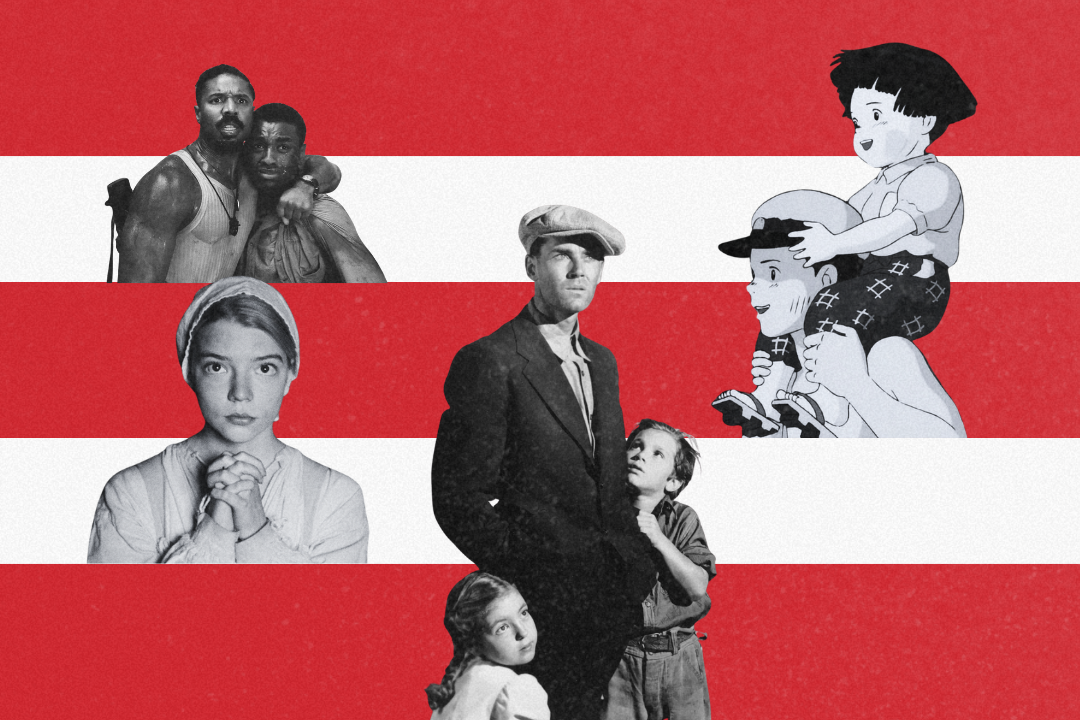
The belief that any problem can be solved if handsome dudes fly directly at it is so American it hurts as much as the alien’s face after being punched by Will Smith. –EG
75. The Grapes of Wrath
John Steinbeck, Henry Fonda, John Ford, the Great Depression, the Dust Bowl, Route 66—there’s so much Americana in this story of the Joad family’s grueling migration from Oklahoma to California in 1930s America that it can seem like just a quaint artifact of another era, but thanks in part to a Best Actor-nominated performance from Fonda and the elite cinematography of Gregg Toland, it remains a timely testament to family and the fight for workers’ rights. –CC
74. Invasion of the Body Snatchers (1956)
Don Siegel’s sci-fi horror classic turns Cold War paranoia into pure nightmare fuel, capturing an America terrified that conformity, fear, and blind suspicion might erase not just individuality, but the very soul of the country itself. –KP
73. Once Upon a Time... in Hollywood
Something you won’t find in history books is a Hollywood stunt double named Cliff Booth annihilating members of the Manson Family after smoking a cigarette laced with LSD—that’s what movies are for. –KP
72. The Watermelon Woman
Cheryl Dunye’s mockumentary questions who controls the history of our country and the value of the many voices that have been pushed aside to create our national mythology, even if unearthing them is difficult and makes us feel uncomfortable. –JP
71. The Thin Blue Line
Brilliant documentary The Thin Blue Line is like America: a detective novel written by stuffed suited bureaucrats, edited by vibes, fact-checked by no one, and sometimes rescued from the abyss by a weirdo with a camera—in this case director Errol Morris. –EG
70. Easy Rider
Featuring (real) drug use, communes, and a soundtrack with the likes of The Band, Steppenwolf, and Jimi Hendrix, this freewheelin’ 1969 motorcycle movie made by Dennis Hooper and Peter Fonda (and his “Captain America” getup) is the epitome of ‘60s hippie counterculture and a characteristic entry in the New Hollywood wave of provocative auteurs making their mark on the movie industry. –CC
69. Minari
Minari turns one Korean American family’s pursuit of the American Dream in rural Arkansas into a tender, funny, and deeply moving reflection on identity, sacrifice, belonging, and the fragile hope required to build a home from the ground up. –KP
68. Sinners
To me there might be nothing more American than two World War I veterans recruiting a band of Black artisans in the Jim Crow South to bring a juke joint to life and then fight vampires—both the mythic kind and the Ku Klux Klan—to the (un)death using the supernatural power of blues music. –CC
67. Here
Robert Zemeckis’ brilliant and unsung Here dares to trace the story of life itself through a single patch of American soil, unfolding across generations in a way that makes your own fleeting time and place in this world (and specifically, this country) feel nothing short of sacred. –KP
66. In the Heights
This film adaptation of Lin-Manuel Miranda’s ecstatic stage musical is a love letter to so many things: New York City, Latin American culture, movie musicals, and the whole-hearted pursuit of the American Dream no matter the obstacles or where you call home. –CC
65. Grave of the Fireflies
American war movies have spent decades celebrating victory in World War II, but this Studio Ghibli film offers a sobering reminder that beneath every triumphant wartime narrative are ordinary children forced to carry war’s unimaginable human cost. –KP
64. On the Waterfront
Winner of eight Oscars including Best Picture and Best Actor, Elia Kazan’s 1954 picture about union corruption among Hoboken longshoremen features a performance by Marlon Brando that changed acting and a potent parable of the McCarthyite “Red Scare” era written not-so-subtly from the informant’s perspective. –CC
63. Now and Then
A time capsule for white, suburban America in the 1970s and 1990s as told from the perspective of four women growing up together and growing older and those who shape their worldview along the way. –NP
62. Reds
One of the great forgotten epics of American cinema, Reds turns politics, journalism, and radical idealism into an unforgettable love story powered by the electric chemistry between Diane Keaton and Warren Beatty at the absolute height of their powers. –KP
61. The VVitch
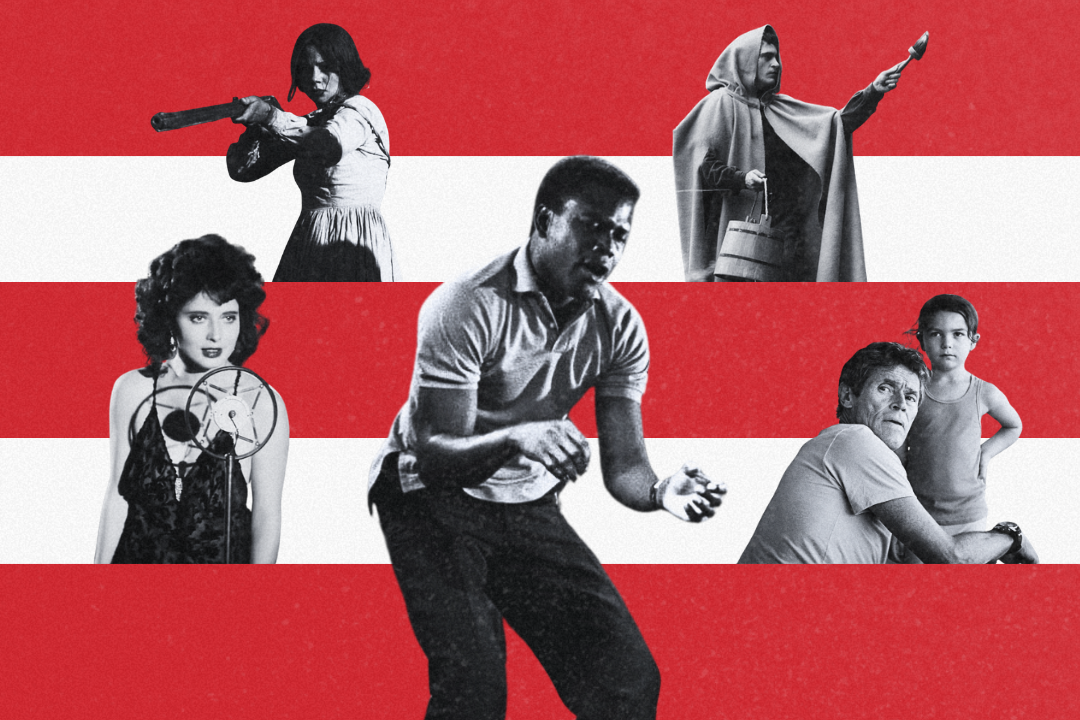
In Robert Eggers’ The VVitch, a family gets so angry with their neighbors that they move into the woods and immediately start hallucinating the most terrifying shit into existence, proving that you can’t analyze the soul of America without acknowledging scary Puritans. –EG
60. Meek’s Cutoff
Kelly Reichardt’s minimalist western set along the Oregon Trail demystifies the famous 19th-century wagon route for what it really was: not merely a scenic trail or inspiration for Millennials’ favorite ‘90s computer game, but a brutal, unforgiving landscape seemingly without end that extracted the costs of westward expansion from the settlers who dared to traverse it. –CC
59. Marjoe
Marjoe is one of the best, weirdest documentaries ever produced, depicting America as the only place where salvation can turn into a roadshow, celebrity into a religion, and that lil religion into a traveling sales convention with a better goddamn soundtrack. –EG
58. The Patriot
It’s fitting that one of the most iconic American films—and one of the rare films about the American Revolution—is often inaccurate and over-glamorizes the tragic mystery of war. –JB
57. Smoke Signals
Based on a Sherman Alexie short story collection and made by an all-indigenous cast and creative team, this breakthrough indie and great road-trip movie spotlights the modern Native American experience with wry humor and a deeply appealing pathos that makes this particular story of friendship, family, and finding your true identity feel universal. –CC
56. Friday Night Lights
Peter Berg’s gritty, heart-wrenching 2004 adaptation of H.G. Bissinger’s book charting a Texas high school team’s run for the state championship gets to the heart of why football has become America’s most compelling and culturally dominant sport: not necessarily the on-field action itself, but everything else—the pain, the pressure, the public scrutiny—that makes it happen. –CC
55. One Battle After Another
An ambitious, propulsive saga with car chases and violence and slapstick comedy and scrappy rebels trying to survive against brutal systemic forces (not to mention an “American Girl” needle-drop for the ages), Paul Thomas Anderson’s One Battle After Another is both a lament for the failures of the past and a cheer for the next generation. –CC
54. The Village
In the wake of September 11, M. Night Shyamalan’s The Village emerged as a haunting reflection of a country consumed by fear of the “other,” ultimately reminding us that no wall, myth, or monster will ever unite people the way love and compassion can. –KP
53. Iron Man
Tony Stark is basically a post-9/11 Horatio Alger: a guy making bazillions selling flamethrowers has a moral panic, and then responds to that panic by building the most badass fuckin’ flamethrower you’ve ever seen, baby! –EG
52. The Godfather Part II
As the second chapter of Francis Ford Coppola’s Corleone saga maneuvers from Ellis Island and early-20th-century New York City to Las Vegas to Washington D.C. and beyond, you realize just how American this multigenerational mafia story is, and how crime is the business we’ve chosen as a nation. –CC
51. The Texas Chain Saw Massacre
A grimy tale of rural America as a still-Wild West, Massacre is a reminder that a nation is only as civilized as its overlooked—and underestimated—assailants. –JB
50. Sunset Boulevard
Only a gimlet-eyed immigrant like writer/director Billy Wilder could so incisively pierce the starry illusions of American showbiz as he does with this timeless noir, which proves that Hollywood is never quite ready for its closeup. –CC
49. Election
With American elections increasingly feeling as dumb as The Masked Singer while everything seems, more than ever, on the line, no other film than Election properly skewers our electoral process, boiling its essence down to a coterie of ruthless overachievers, dumb jocks, agents of chaos out for revenge, and the people behind, losing their morality by the minute, as they try to hold together our country, or destroy it forever. –JP
48. Office Space
Ever more relevant even after nearly 30 years, Mike Judge’s uber-quotable cult comedy is an ode to every office worker subjected to the absurdities of American corporate life and dreaming of their own petty revenge against the anti-human, Silicon Valley-influenced technopoly that wants to extract everything from you—including your red Swingline stapler. –CC
47. Nashville
Cowboys, candidates, gospel singers, groupies, and gloriously tangled American chaos—Robert Altman’s Nashville turns country music and bicentennial optimism into one of the sharpest, funniest, and most eerily prophetic portraits of America ever put on film. –KP
46. Blue Velvet
David Lynch’s suburban nightmare uncovers the dark world of chaos lying beneath our perfect lawns and summer barbecues, and how America can never truly hide from its duality, other than in dreams. –JP
45. The Florida Project
For a large number of Americans, including the kids in Sean Baker’s attentive 2017 film living in the impoverished outskirts of Disney World, the only magic kingdom they’ll experience is what they imagine for themselves amidst a precarious, often dangerous, yet somehow wonder-filled existence. –CC
44. Spotlight
The Best Picture-winning Spotlight is a reminder that now, as ever, the unforgiving work of journalism is a vital facet of bringing light to darkness and vindicating the marginalized. –JB
43. A Raisin in the Sun
A Raisin in the Sun transforms one family’s cramped apartment and deferred dreams into a powerful reflection on race, ambition, and the American Dream, with Sidney Poitier delivering the kind of electrifying performance that’ll shake you to your core. –KP
42. Drop Dead Gorgeous
Michael Patrick Jann’s mockumentary Drop Dead Gorgeous can best be described as a beauty pageant held over a sinkhole, sponsored by a feedstore, judged by lunatics… and then the murders begin! –EG
41. National Lampoon’s Christmas Vacation
Forget the Fourth of July and Thanksgiving—Christmas is by far the most American of holidays, as this John Hughes-penned mistletoe misadventure showcases through its chaotic family gatherings, underwhelming year-end bonus, overcooked turkey, and sewage-powered lightshow featuring an enflamed Santa’s sleigh that somehow makes it all worth it in the end. –CC
40. JFK
Oliver Stone’s polemical take on the Kennedy assassination and its enduring aftermath is the cinematic patron saint of galaxy-brained conspiracy theorists everywhere, but especially in the good ol’ U.S. of A where conspiracies flow from sea to shining sea. –CC
39. Mississippi Masala
In the vibrant and sensual Mississippi Masala, Indian-American filmmaker (and Zohran Mamdani’s badass mother) Mira Nair reminds us that love transcends in a world where “racism is passed down like recipes.” –KP
38. The Man Who Shot Liberty Valance
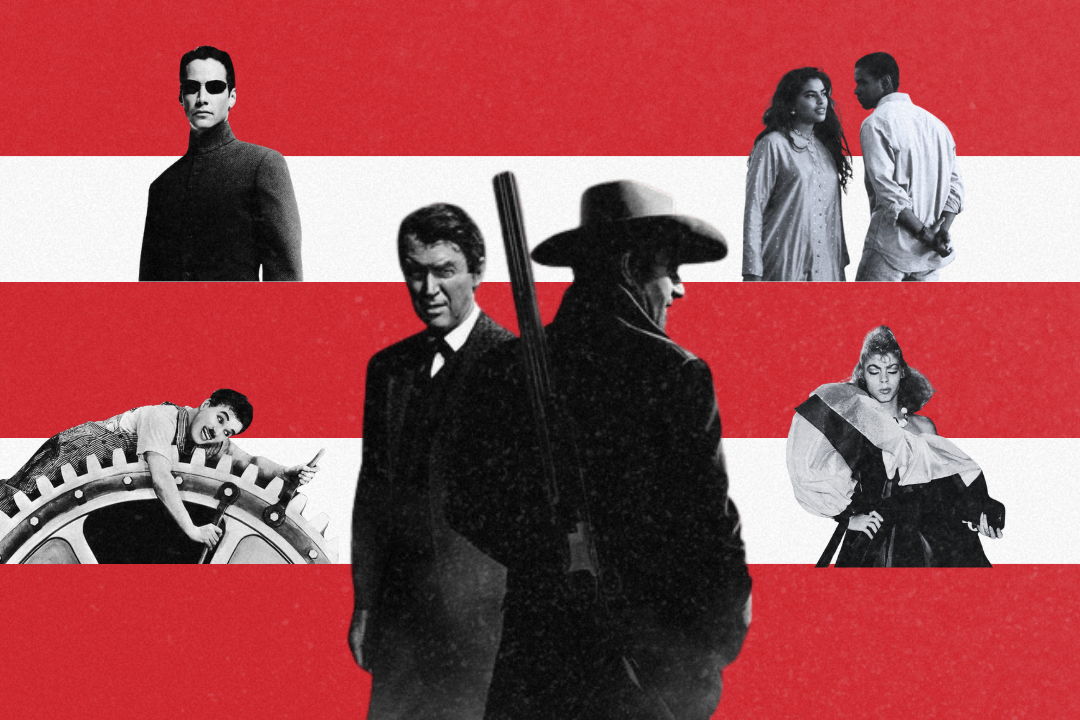
At once traditional and revisionist, John Ford’s end-of-an-era western stars two screen icons, Jimmy Stewart and John Wayne, in their first time together on screen acting out a fable that speaks to the fundamental questions of how America’s story gets told and retold. –CC
37. Field of Dreams
America’s Pastime transcends time and space, and Field of Dreams casts baseball as both an otherworldly endeavor and one grounded in the greatness of small-town American culture. –JB
36. Casablanca
Though set in Morocco and focused on the European theater of World War II, Casablanca embodies America’s crucial role in the real war through the evolution of Bogart’s Rick Blaine, who plays host in his cafe to a melting pot of political intrigue that eventually spurs him from transactional isolationism to principled action. –CC
35. It’s A Wonderful Life
Friendship, loyalty, and unity in diversity rebuke an overrealized American dream, and It’s a Wonderful Life is the most beautiful lesson in these good and beautiful values. –JB
34. Selma
Selma is a reminder to us all that in the face of institutional oppression, unified direct action will make the will of the people heard—a message more important ever when the right to vote unencumbered, that Black Americans fought so hard for, is once again being stripped away by the American machine. –JP
33. Team America: World Police
Trey Parker and Matt Stone’s puppet parable satirizes the militaristic bravado, self-serious celebrities, and Hollywood action movies of the post-9/11, “War on Terror” era, lobbing spitballs at all the figures and forces that made that time feel both low class and high stakes. –CC
32. The Matrix
After seeing The Matrix in 1999, I loved it so much that I spent the rest of the night dodging invisible bullets in slow motion with my friends, blissfully unaware that less than 30 years later we’d all be living in a Matrix of our own shaped by manipulated realities, technological dependence, and a very Neo-like search for truth. –KP
31. The Crowd
A classic from King Vidor at the height of the silent era, The Crowd spins a modern American fable: tell every child they’re special and then stuff them into a cubicle—it’ll be melodramatic, but keep smilin’, you goddamn superstar! –EG
30. My Big Fat Greek Wedding
My Big Fat Greek Wedding is a beautiful love story that’s as American as milopita: your grandparents cross oceans to preserve the old country and accidentally invent a completely different, sincere version in the ‘burbs. –EG
29. Apocalypse Now
Capping off his legendary ‘70s run with a bang, Coppola’s story of a soldier descending into the jungle to hunt down a madman during the Vietnam War is an apt metaphor for the war itself, where America’s colonial ambitions received a tragic awakening. –CC
28. The Wolf of Wall Street
Adapted from a memoir by Jordan Belfort, an enigmatic stock broker and con artist in the 1990s, what makes The Wolf of Wall Street one of the most American stories in cinema is its portrayal of the manic highs and rock-bottom lows of that era led by the promises that capitalism made and broke—and keeps on making and breaking. –NP
27. Paris Is Burning
Long before LGBTQ+ stories were welcomed by the mainstream, Paris Is Burning celebrated the fierce creativity, resilience, and chosen families of New York’s underground ballroom scene in one of the most vibrant and influential documentaries ever made. –KP
26. All the President’s Men
The most enduring lesson from this thrilling, ripped-from-the-headlines Watergate potboiler isn’t the power of the press or the importance of holding public officials accountable (both still true)—it’s Deep Throat’s pithy exhortation to Bob Woodward, which will never steer you wrong when you seek to uncover misconduct: “Follow the money.” –CC
25. Born on the Fourth of July
Tracing a soldier’s journey from youthful idealist to enlisted Marine in Vietnam to paraplegic addict to antiwar advocate, this Ron Kovic biopic remains an unfortunately timeless takedown of combat’s tragic toll and America’s neglect of veterans. –CC
24. Dazed and Confused
Akin to American Graffiti with way more bongs, Gen X standard-bearer Richard Linklater’s Dazed and Confused looked at drugs, no adult supervision, potential lead gasoline-caused brain damage and said, “Hell yes this is when American culture peaked.” –EG
23. Boyz n the Hood
Placed starkly in contrast against the coming-of-age classic Stand by Me by Rob Reiner, John Singleton’s seminal film Boyz n the Hood shook the world with its unflinching portrait of Black youth navigating violence, poverty, friendship, and survival in South Central Los Angeles. –KP
22. Modern Times
Charlie Chaplin sliding helplessly through the giant gears of a factory machine in Modern Times remains one of the most enduring, hilarious and brutally honest images of the American Dream ever captured on screen. –KP
21. Lincoln
No stranger to biopics with Schindler’s List awards lining his shelves, Steven Spielberg had the better angels of the genre by his side for this one, which elegantly encapsulates the Civil War and a literal Mount Rushmore president into a nuanced portrait celebrating the era’s consequential decisions while spotlighting the unsavory politicking it took to make them happen. –CC

20. Harlan County, USA
(Coal-fired) power to the people of Harlan County, who lit the way and risked everything for their jobs, their families, their community, and their dignity—this is democracy in action, baby. –KP
19. The Social Network
A warning that no one heeded, David Fincher’s The Social Network details (chillingly, in retrospect) the lonely, embittered 21st century tech bros who reinvisioned the American dream in their image—but we still don’t have to accept their friend request. –JP
18. The General
Stand down, Captain America—Buster Keaton bumbling his way through the Civil War on a locomotive in pursuit of love and self-respect is the only American hero I need. –KP
17. 12 Angry Men
Sidney Lumet’s legal thriller is tense and disheartening, yet it is ultimately a beautiful testament to the power of one person to change an imperfect justice system. –JB
16. Night of the Living Dead
Perhaps no other 20th-century film captures the tragedy of unquestioned loyalty to political and ideological homogeneity with as much deftness and shocking dispassion as does George Romero’s masterpiece. –JB
15. Fargo
Snow-covered murder, small-town decency, and painfully polite Midwestern chaos collide in Fargo, the Coen Brothers’ pitch-black masterpiece where greed and stupidity spiral wildly out of control while goodness quietly endures. –KP
14. King Kong (1933)
More than just a monster movie, King Kong transforms America’s fascination with conquest, fame, and domination into a tragic tale where the greatest threat comes not from the beast himself, but from the world hell-bent on exploiting him. –KP
13. The Truman Show
In a world where we choose to broadcast every moment of our lives and live within simulated ideological bubbles of our own making, there’s no need for elaborate illusions like in this brilliant Peter Weir satire: we are all Truman now. –CC
12. Rocky
What’s more American than this hopeful, crowd-pleasing underdog story knocking out all-timers Network, All the President’s Men, and Taxi Driver—the Apollo Creeds of their era—to be crowned Best Picture of 1976? –CC
11. Hoop Dreams
In Steve James’ hopeful and challenging documentary portrait (which Roger Ebert called “one of the best films about American life I have ever seen”), two boys growing up in inner-city Chicago with aspirations of a professional basketball career clash with systemic blockers and disadvantages, ultimately leading us to question who really has access to the American Dream? –NP
10. Dr. Strangelove
A quintessential satire about the powers that be and their influence upon the nation, Stanley Kubrick’s Dr. Strangelove weaves seamlessly between prescient military mantras (such as “Peace is our profession”) and searing rebuke. –JB
9. Saving Private Ryan
You know a war movie has captured the full spectrum of heroism and hellishness that come with combat when the unforgettably violent D-Day landing sequence that opens Spielberg’s World War II epic feels just as traumatic as watching a single soldier slowly die alone in the rain. –CC
8. The New World
Terrence Malick’s lush, laconic film depicting the 1607 establishment of the Jamestown settlement and subsequent Pocahontas saga is America’s Book of Genesis: a founding myth that begins in Edenic wonder but slowly curdles into catastrophe, revealing the original sins of colonialism that would set the stage for the unruly empire to come. –CC
7. 12 Years A Slave
Steve McQueen’s harrowing Best Picture-winning film—based on the 1853 memoir by a Black American about being kidnapped, sold into slavery, and surviving barbaric captivity on a Southern plantation—forces white audiences especially to reckon with the dehumanizing nature of America’s original sin that we’re still dealing with today. –NP
6. High Noon
Fred Zinnemann’s 1952 western (which, like On the Waterfront, was inspired by the blacklist politics of the Red Scare but from the opposite perspective) uses a Best Actor-winning performance by Gary Cooper to set the template of the lone gunman against the world that would pervade the most American of genres forevermore. –CC
5. Apollo 13
As told through the true story of three brave astronauts in crisis and the NASA team trying to bring them home, Apollo 13 captures both sides of America’s relationship with space: the religious ritual and worship of spaceflight and, once the Moon landing was televised, the abandonment of the space program by the American public. –NP
4. Network
If you, too, started receiving ads for a new coffee maker after merely mentioning it near your phone, then join me in getting mad as hell, watching Sidney Lumet’s (apparently) timeless Network, and unleashing your inner Howard Beale on the powers that be. –KP
3. Do the Right Thing
In Spike Lee’s devastating magnum opus, the emotional tone resembles a pressure cooker duct-taped to an ice cream truck: funny, loud, generous, furious, on the edge of a riot, and about three degrees from becoming a tragic news story. –EG
2. There Will Be Blood
When the central question in Paul Thomas Anderson’s epic of whether America is a Christian country or a capitalist country is answered by having Daniel Day-Lewis’s avaricious oilman bludgeon a preacher with a bowling pin, it becomes clear: We are in fact a Christian-capitalist country and thus the corrupted version of both, like if Jesus at the party had turned water into wine and then, instead of sharing it, said “I drink it up!” –CC
1. West Side Story
Neither too cynical nor too hopeful, West Side Story may be the quintessential American movie: a heartbreaking portrait of a nation forever at war with itself that somehow transforms violence, prejudice, and urban despair into something vibrant, timeless, and utterly transcendent. –KP