
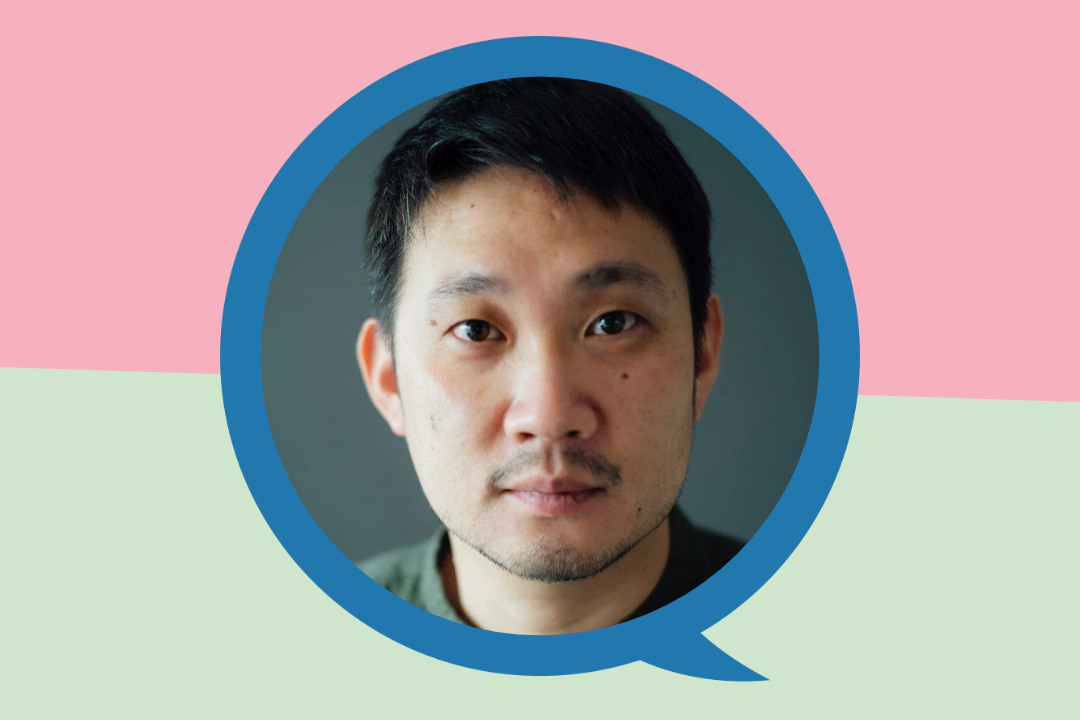
In Maker’s Dozen, we ask folks in and around the film industry 12 questions and have them ask one of us.
Ryusuke Hamaguchi is the writer-director of Happy Hour, Asako I & II, Wheel of Fortune and Fantasy, Evil Does Not Exist, and the Academy Award-nominated Drive My Car. His latest film All of a Sudden premiered at the Cannes Film Festival and is in theaters on November 25.
In this Maker’s (Half) Dozen interview with our chief critic James Podrasky, Ryusuke talks about the origins of the story that became All of a Sudden, how he casts actors, how the Humanitude method informed his filmmaking, and more!
This interview has been edited for content and clarity.
What was that “aha” moment or initial spark that led you to pursue this story as your next film project?
I would say the moment I finished reading the original source that inspired this book was the moment I knew this would be my next work. The original source is the book You and I – The Illness Suddenly Get Worse, which is an exchange of about 10 letters between the philosopher Makiko Miyano and an anthropologist named Maho Isono. Makiko Miyano lived with terminal cancer, and around the midway of the exchange, her condition turned for the worse, and she eventually passed away after the publication of the book. But I was very moved and intrigued by their exchange because what starts out as a sharing of insights and wisdom between these two scholars really changes as the philosopher’s condition worsens. They step out of their framework of scholars, and their relationship turns much more humane and emotional, and this emotion rises out of their shared wisdom. I was quite moved down to my core, and I knew the book really changed my life. I wanted to impart what I felt about the book into this film and share it with the audience. So that served as my motivation.
Their friendship in the film feels so real and lived-in. What, if anything, did either you or they do to foster that chemistry going into the filming of All of a Sudden?
I think it just comes down to the right casting. In playing these characters that were modeled after these two scholars, I really had to look for a person who could carry this conversation of abstract ideas. Not just outrate them as dialogue, but really digest them and make the lines their own. And at the same time, I was looking for the humanity in each actor because you really want to be appealed to by their natural state so that you can watch them talk for a long time. When I meet with actors, I don’t ask them to act in front of me or anything like that because that doesn’t tell me anything. I have an extended conversation with them. I ultimately found Marie-Lou and Mari were what I was looking for through these extended conversations and by looking into their humanity. That was, I would say, 80% of my job.
When you were researching the Humanitude method, did that change how you approached making this film and working with actors? Are there any specific techniques that you employed?
I wouldn’t say that Humanitude directly changed the way I do things or filmmaking at large, but it did provide a hint. And that hint was looking clearly at the physical structure of things. With dementia patients, what’s weakening is their cognitive abilities. That’s what is making their conversation difficult. So that is at the root of things. What’s necessary when associating with them in a better way is to look at the structure in which we converse with them. So just getting closer to them or being more sensitive to how they want to be touched. All these things cannot be directly applied to the filmmaking itself, but it did give me the hint of looking at the overall structure. And in filmmaking, sometimes there arises a moment when human beings aren’t treated as human beings, whether it be the younger crew or the actors. They can be treated as things rather than people. So, in order to avoid that, to pay attention to the structure and what kind of environment is being created, is what I garnered from Humanitude.
I was curious about the residents in the nursing home. Were those all actors, or were they non-professionals? And what was the process of working with people with memory care issues or getting actors to portray that carefully and sensitively?
The dementia patients in the film are all actors, but we did rent out and shoot in real existing care facilities. And sometimes the patients of the facilities would appear as extras, but those are all people who could give informed consent. And so the preparation stage in the real care facility was very helpful in that we were able to observe some patients as they are and as they live their daily lives. But it was important to me to detect each character that you see in the film as someone that has a history and their own spirit and not simply on a superficial level as a dementia patient. So that understanding of who they are and their history was a very foundational part of the filmmaking and acting.
Tao’s character memorably says towards the end, “I want to live. The world is the best.” I’m curious if you have experienced any “the world is the best” moments in your life recently or while developing this project. Compared to the tone of Evil Does Not Exist, this film is so much more hopeful and gives a blueprint of how we can kind of fix things in the world or between each other.
I will say that we only have this one world to live in, and this world is constantly the best and it’s constantly the worst. And the question is, which one do you pay attention to? Which one do you see? There are days when I wake up in the morning, and I’m healthy, and I feel this world is the best. But as the day wears on, I feel this is the worst. But it really comes down to which one you value? Which one do you see?
Growing up, I visited my grandmother in a nursing home each week. And while not abusive, the film filled me with the sadness that she could have had this type of experience, but also the hope that maybe my final years will be filled with this level of compassion. If you’re comfortable sharing, did you have any memory of an older relative that you carried with you while you were creating this work?
My grandparents are no longer living, but I do have very fond memories of them throughout my teens. And I have always been aware of how much they loved my own parents, and they, in turn, imparted that love into their grandchildren as well. In particular, on my mother’s side, my grandmother was closest to me, and she lived with dementia, and she was in a nursing home. At the time, I had only read about Humanitude, but I tried applying a little bit of that technique when I went to see her—approaching with gentleness and with a louder voice. That technique allowed me to converse quite clearly with her. That memory really served as a conviction in this film that these things can happen. It gave me the conviction and the confidence.
You’re a very accomplished, award-winning filmmaker with multiple movies that critics and fans consider masterpieces. Is there anything else you feel that you haven’t achieved creatively or want to explore in your career?
I personally feel that I haven’t accomplished anything. I still regard myself as a student. And in terms of awards, I always feel that it’s kind of excessive recognition. I would like to protect the part of me that feels that way about myself and go on with that awareness.
