
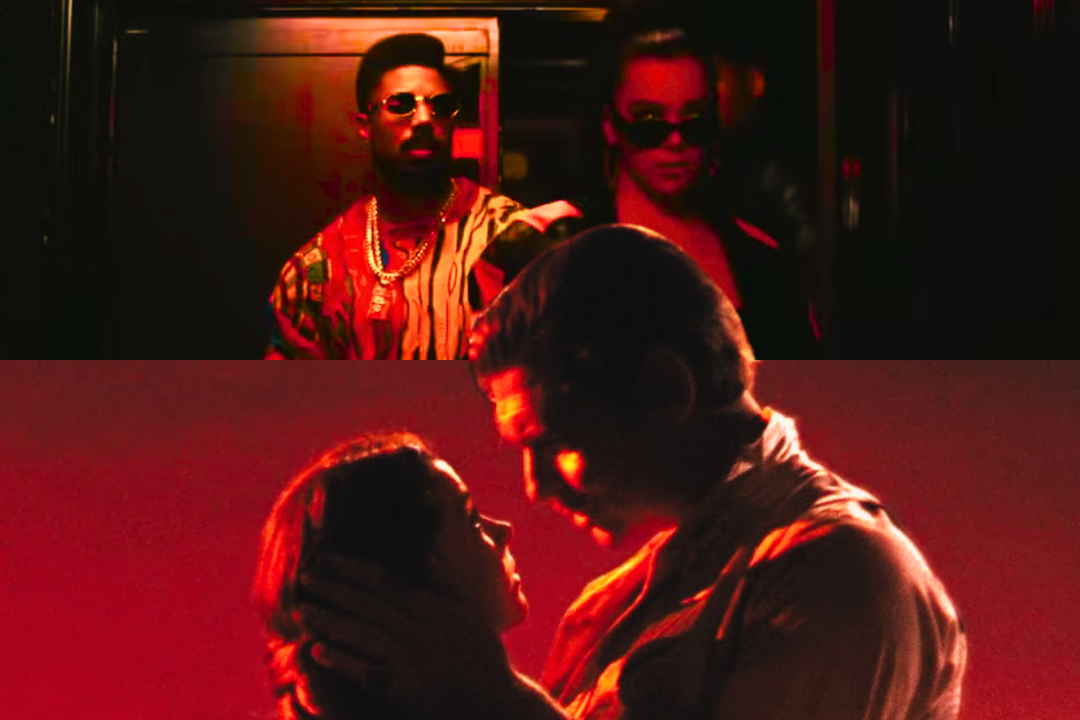
The more movies I watch, the more I realize that when a movie is made says as much about it as when it’s set.
Filmmakers of period pieces usually try to accurately depict what life was like in the past, yet because we humans remain captive to our current moment, we still bring with us the assumptions and perspectives of our present whether we want to or not.
Using that bifocal lens, I discovered that two very different movies, made generations apart, actually share a surprising common thread. One that stitches together a vision that looks upon the past with both rose-colored glasses and a gimlet-eyed, rockets-red glare.


Margaret Mitchell was a journalist who grew up in early twentieth-century Atlanta hearing stories about the Civil War and Reconstruction eras from her grandmother, who had lived on the family’s plantation. She used those stories, along with other people in her life, as inspiration for what became her only novel, 1936’s Pulitzer Prize-winning Gone with the Wind. Her mother Maybelle, for example, was a leading suffragist in Georgia and model for Scarlett O’Hara, while her first husband, an abusive bootlegger, became Rhett Butler.
The book was a sensation and so soon enough was the film, released in 1939 by MGM—along with The Wizard of Oz and other classics in an all-time movie year—during the heyday of the Old Hollywood studio system era. The film, directed by Victor Fleming, definitely shows its age in many ways, not the least in its racial and gender stereotypes. Yet the epic scale of its production remains impressive and Sidney Howard’s screenplay sparkles with wit, particularly between Scarlett (Vivien Leigh) and Rhett (Clark Gable)—two cutthroat scoundrels and outsiders who don’t feel at home even at home, and who dance around each other while eagerly flouting custom for the sake of a thrill. Vivien Leigh’s face alone should have been awarded its own Oscar for the number of hilarious and cutting reaction shots she adds to every situation.
Even today Gone with the Wind remains the highest-grossing film in history when adjusted for inflation. In 2025 dollars, that would put it at $4.5 billion over Avatar’s $4.1 billion. It was also the first Academy Awards juggernaut, winning eight out of its then-record 13 nominations including Best Picture. (It should have been nine: honestly wild that Clark Gable lost to Robert Donat for Goodbye, Mr. Chips.)
Beyond its box office and accolades, Gone with the Wind’s primary legacy is its lasting influence on American cultural memory. For better or worse (mostly worse), nearly 90 years later it arguably remains the most famous movie about the Civil War, slavery, the antebellum South, and not giving a damn. Its reputation always precedes it.
But there’s a new contender for the film that most uniquely defines pre-modern Southern life, and it brings its own twist on a time-tested genre.


Set in early 1930s Mississippi, Ryan Coogler’s Sinners follows identical twins and World War I veterans Elijah “Smoke” and Elias “Stack” Moore (both played in an Oscar-winning performance by Michael B. Jordan) as they return to their hometown after seven years in Chicago working for the Irish and Italian mobs. Using money they stole from them, they purchase an abandoned sawmill where they plan to open a juke joint for the local Black community. They recruit their cousin Sammie and musician friend Delta Slim to perform, a fieldhand named Cornbread as bouncer, and other folks around town to help put it on.
Enter Remmick, an Irishman in the area under mysterious circumstances who also happens to be a vampire. After capturing a local couple as fresh vampire thralls, the trio become a roving folk group that’s drawn to the blues music Sammie performs at the juke joint, which has a mystical power to summon spirits from the past, present, and future of the Black diaspora. This sets up an epic, violent, and high-stakes showdown with the expanding vampire clan, who want Sammie’s powers to summon their own community.
Similar to Margaret Mitchell, Coogler has spoken about Sinners emerging from his own family history. He wrote the story as a love letter to his late uncle, whose roots in Mississippi, love of blues music, and stories about life in the South stuck with him. The movie’s central theme of tapping into one’s ancestral powers is a fitting nod to this inspiration, and leads to the showstopping “I Lied to You” sequence that brings this idea to vibrant life.
It’s not a stretch to say the milieu and events of Sinners represent what we don’t see in Gone with the Wind: the private lives of the African American community. The folks Smoke and Stack recruit for the juke joint get to be depicted as full human beings with histories and fears and desires and at least some agency within the stratified culture of their time. Unlike Gone with the Wind’s Mammy and Prissy and Big Sam, who are just supporting players literally subservient to Scarlett’s story (though Hattie McDaniel made a strong enough impression to earn Best Supporting Actress).
After its impressive box-office haul, Sinners then set an Oscars record of its own, scoring an unprecedented 16 nominations and four wins. The success of such a singular, horror-infused, and ecstatically Black production showed both confirmation of the talent involved and a future for stories that want to reckon with the past in a creative way.


So how are these two movies connected?
Gone with the Wind is about the Civil War, yes, and how it was experienced by the White Southern enslavers of the time. But the novel came out a lifetime after the events it depicted. Mitchell started writing it in 1926 and it was finally published in 1937, with the movie released two years later. Knowing what we know about how our present influences our view of the past, that grounds this story deep in the Great Depression era and directly overlaps with the events of Sinners, which is set in 1932 just two states away.
This context is important because it plants both films in the same specific place and period, which had its own ideologies that undergird the behavior of the characters.
One of these was socioeconomical. In both films the characters exhibit a Depression-era mindset where life is toil and resourcefulness is essential for survival. “If I have to lie, steal, cheat, or kill, as God is my witness, I’ll never be hungry again!” Scarlett famously vows. It’s a sentiment that would have deeply resonated with 1930s audiences—who had been living through a period of sharp scarcity—but also the characters in Sinners, who do a lot of lying, stealing, cheating, and killing in the name of survival.
The other ideology was political. The “Lost Cause” narrative endemic to the post-Civil War South held that the Confederacy was a noble, morally just movement in defense of chivalry, states’ rights, and slavery, which it considered a necessary good and definitely not the primary cause of the Civil War. It insisted the South and what it stood for weren’t actually defeated, but simply overpowered by the better equipped and financed Northerners. This narrative is what, decades after the war, fueled the reemergence of the Ku Klux Klan and the implementation of white-supremacist Jim Crow laws that codified racial segregation long into the 20th century—both epitomized in the installation of statues of Confederate generals and leaders throughout the South (most of which have been removed since the George Floyd shooting in 2020).
It’s impossible to extricate Gone with the Wind from this historical context. More than that, the film explicitly endorses it. It’s subtitled “A Story of the Old South” in the opening credits and begins with a text prologue (written just for the film by screenwriter Ben Hecht) that’s not shy about its aims:
“There was a land of Cavaliers and Cotton Fields called the Old South. Here in this pretty world Gallantry took its last bow. Here was the last ever to be seen of Knights and Ladies Fair, of Master and of Slave… Look for it only in books, for it is no more than a dream remembered. A Civilization gone with the wind…”
The Lost Cause even gets name-checked within the film. As the initial enthusiasm for the war fades, resources grow scarce, and the casualty list rolls in from the Battle of Gettysburg, Rhett Butler, a blockade runner for the Confederacy who had nevertheless been against the war since the beginning, scoffs at the idea of continuing it: “The South’s sinking to its knees. It’ll never rise again. The Cause… the cause of living in the past is dying right in front of us.”
This ideology is baked into the story of Sinners. The abandoned sawmill the twins purchased for the juke joint was sold to them by a man named Hogwood, who was revealed to be a local Ku Klux Klan leader and had planned to attack the joint with his posse the following day. This bait-and-switch ambush was textbook Jim Crow, and something that receives its rightful, satisfying comeuppance in the film.


The KKK were the real-life villains of Sinners, but its fantastical ones also represent significant connective tissue between the two films, simply because the vampires and the O’Haras are both Irish.
Coogler said that Remmick identifies with the Black characters because of “the connection between what we experienced—we being African Americans… forcibly removed from the continent of Africa… and the experience of the Irish people being forced to work land that has immeasurable abundance and wealth, but being denied that.”
So in Gone with the Wind, when Scarlett tells her father she doesn’t want the family plantation passed down to her after he dies, he’s incredulous: “You mean to tell me that land doesn’t mean anything to you? Why, land is the only thing in the world worth working for, worth fighting for, worth dying for, because it’s the only thing that lasts.”
The big difference, of course, is that the land they loved so dearly, that was so worth working and dying for, was being worked by enslaved people. And the vampires have a similarly exploitative agenda. Claiming Sammie’s otherworldly abilities would allow them to control a powerful engine of extraction while also growing their ranks. It’s the kind of cursed logic that made slavery a lucrative business for the antebellum elites and a vicious cycle of violence and despair for the enslaved.


Sinners may have been set in the 1930s, but what about when it was made? Living through the 2020s right now, I don’t have the benefit of hindsight that future historians and film watchers will enjoy. But it’s not hard to see how resonant the film is in our current moment. Look no further than the development and release of the movie itself: Coogler getting first-dollar gross, final cut, and rare ownership of the film after 25 years was significant even for a successful auteur, yet the smear campaign that followed—plus the now-infamous Variety headline downplaying the movie’s opening-weekend box office haul—exposed the bias and double standards that continue to stick to Black artists while evading their white counterparts.
That’s the paradox of being trapped in our own relentless now: time—and its perspective-expanding powers—is the only thing that lets us escape it yet is always in short supply.
That’s why these two stories needed a lot of it before they could come to fruition. Margaret Mitchell’s novel was released 71 years after the end of the Civil War, while the difference between Sinners’ setting and release was even larger at 93 years. Both had several generations’ worth of time to stew in their ever-evolving cultural melting pot, to absorb new ideologies, to cast off old ones, and to undergo the revisionism that comes for all of our collective histories whether we like it or not.
“It’s magic what we do. It’s sacred, and big.” That’s how Delta Slim describes blues music, and it’s how I’d describe the power of movies to be time machines and portals to epiphanies we couldn’t otherwise see—that would indeed be gone with the wind.
