
How ‘Spider-Man: Homecoming’ Gave Hope to a New Generation

The Scoop features personal essays on movie-related topics.
I was lucky enough to be a teenager during what I call “the Golden Age of Marvel.” I’m sure you remember those days: Thor was into Pop-Tarts, everyone lived together in Avengers Tower, and Clint crawled around and spied on everyone through the air ducts. Life was good.
In fact, Marvel gave me some of the most wonderful times of my life. Back in the day, I had a small group of friends with whom I’d go see each movie as they were released. Marvel was my source of those nostalgic, American Graffiti-style summers that other adults spoke so wistfully of: Trips to In-N-Out for burgers and milkshakes beforehand, blasting the music from the previous film on the way there, getting home late because you were all still freaking out about it outside the theater thirty minutes later.
Sometimes, our little group would run into other mutual friends who would just be arriving for the next screening, leading to frenzied conversations as we passed by. Riding the high of what we’d just seen, we tried to express our excitement. But partly out of a conscious desire to withhold spoilers, and partly because we were usually lost for words anyways, all they would get from us were general exclamations of “it’s so good!” “You’re in for such a treat!” “What just happened?” Occasionally, we’d exclaim in whispers, swapping even those non-spoiler-y comments with them like “Oh my gosh, INSANE!” as if we were still sharing sacred secrets about the film’s contents.
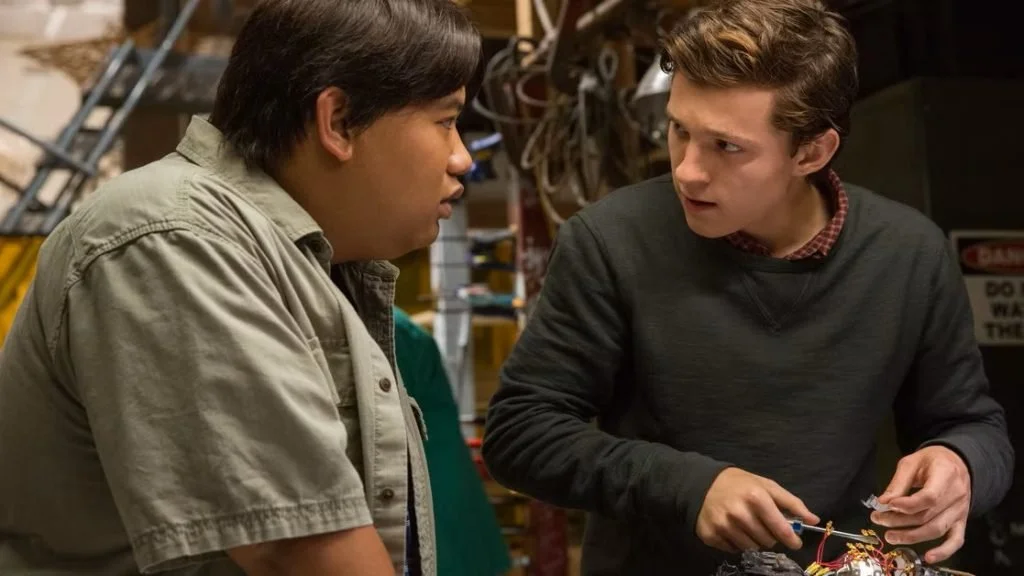
My obsession with Marvel reached its pinnacle with Captain America: Civil War. I was just 16 years old when we were introduced to the new Peter Parker, played perfectly by Tom Holland. Admittedly, Spider-Man was the one aspect of the film I hadn’t read much about in the months leading up to the film’s release, and as soon as he appeared, I was gobsmacked. To this day, just thinking of Alt J’s “Left Hand Free” playing as a giant white “QUEENS” flashes across the screen brings tears to my eyes.
Because of that, I can’t adequately put into words the ecstasy of anticipation that filled the year-and-a-half leading up to the release of Spider-Man: Homecoming in 2017. Nor will I attempt (for the sake of preserving my own dignity) to describe the fangirling mess I was when it finally arrived. There was actually a brief moment a few days before in which I debated whether I should see it at all. The idea of watching the whole movie at once was so overwhelming; I wondered whether I would be able to fully process what was happening on the screen. (The remedy for this proved to be simple: At least 4 more trips to the theater indeed helped me grasp every single second.)
Good Times and Great Responsibilities
Why did Peter Parker and his Spider-Man resonate so much? On its release, Homecoming drew a lot of comparisons to various John Hughes movies, and rightly so. The movie was our generation’s version of The Breakfast Club—a story that told us the world wasn’t blind to our struggles. In my high school leadership program, our final “exam” (which took place over several days) consisted of the students sitting in a circle and sharing something we struggled with. When I told an older acquaintance about the assignment, I’ll never forget her reaction: She laughed.
“What kind of struggles could people your age possibly have?” she said.
Whether intentional or not, my response happened to be the same one Peter Parker gave to Liz at one point in the movie: “You’d be surprised.” I heard stories from my peers, and noted that those who were going through the most were the kindest people in the class. And even if our crush’s dad didn’t turn out to be the villain our alter-ego was trying to bust for illegal arms dealing, everyone was going through something rough. Homecoming focused as much on Peter’s everyday struggles as his superhero ones. It wasn’t just Peter, either: Various characters in the movie let people my age know that we weren’t alone, and more importantly, showed us that it was still possible to react to life’s curveballs with kindness, a desire to do the right thing, and an appreciation for our family and friends who carry us through.
As we’ve followed Peter’s journey throughout the MCU, his life has become progressively more traumatic and filled with multiple losses. While the problems of our teenage years are certainly nothing to be scoffed at, it’s safe to say that the longer we spend on this planet, the higher the likelihood of experiencing pain and loss. We’ve all come a long way since the Civil War days. Peter has been through the mill—and between a global pandemic and an increasingly polarized world, so have we. My generation has grown up with Tom Holland’s Spider-Man, and in many different ways, his loss of innocence between Homecoming and Brand New Day mirrors our own.
“My generation has grown up with Tom Holland’s Spider-Man, and in many different ways, his loss of innocence between Homecoming and Brand New Day mirrors our own.”
Yet, Homecoming also blended Peter’s trials with the sweet innocence and optimism that, paradoxically, also comes with youth. Another large part of me loves the film because of how happy it is. We get to revel in Peter’s victory after Liz agrees to go to the school dance with him. We cheer when MJ gives the winning answer at the decathlon. My friends and I all had our small wins too: For all our teenage angst, that was also a time of immense hope. We had ideas of who we wanted to be or what we wanted to do, but we didn’t worry about whether any of that would come true. We enjoyed the present, knowing the future would come soon enough, and was ours for the taking anyways.
Yes, Peter has matured and taken on more responsibility over the years, which is a good thing—but there are still qualities in the early Tom Holland Spider-Man era that I hope we’ll find he retained in Brand New Day. And likewise, there are similar things about our younger selves that I think we would do some good to hold onto.
That’s what I think about when I revisit Spider-Man: Homecoming as an adult: those summers with my sweet high school friends (many of whom I’m still in touch with), and the optimism I had. I see the film as a reminder that we don’t have to leave that optimism behind just because we’re older. We can still choose to see the world through Peter Parker’s eyes by seeing the good in everyone and, despite what might be happening in our own lives, striving to be the friendly Spider-Mans in our own neighborhoods.