
Review: In the provocative ‘Romería’, an orphan spends the summer uncovering family secrets
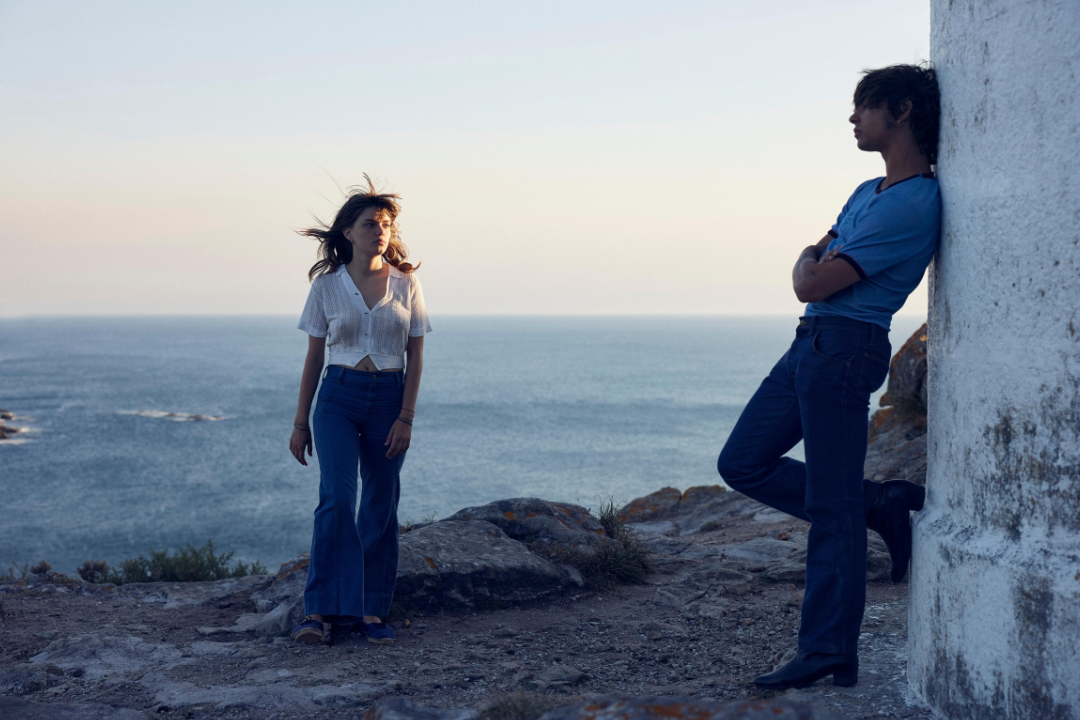
2026 / Dir. Carla Simón / 2026 Chicago Critics Film Festival
Rating: 4/5
Watch if you like: Aftersun, Blue Heron, The Celebration, having to spend your summer vacation unearthing your estranged family’s buried secrets.
Taking place in 2004 in the beautiful surroundings of the small Spanish town of Vigo, Romería checks off many of the hallmarks of Rohmer-style European coming-of-age summer films while wading into murkier waters of memory and identity.
An orphaned 18-year-old, Marina (Llúcia Garcia in her film debut), can’t secure the scholarship needed to attend film school without legal documentation proving she’s her father’s daughter, causing her to seek out her estranged paternal family—some of whom are eager to help her and others who don’t want to be reminded of the circumstances around her father’s death.
“Who would I be if my father’s family raised me?” Marina writes in the diaristic daily chapter divisions of the film, and this is key to its ideas. Though she has little to no memory of her parents, she has her mother’s diary and stories from her mother’s family. Meanwhile, every member of her father’s family tells her something different, down to where they even lived in Vigo. That raises the question of how our identities are constructed when the pieces that go into them aren’t even concrete. Director Carla Simón’s (Summer 1993, Alcarràs) ideas are quite provocative, although I wish her central character were less of a passive observer.
Romería treads a similar path as the recent Blue Heron, including a later device in which Marina finds her own understanding of her parents. In this section, the visual language and pacing change, becoming more adventurous and surreal, even incorporating a delightfully offbeat dance sequence. Like with Blue Heron, this sequence was the key to the whole film for me, transporting me from an expected path to something quite special.