
Review: 40 years later, ‘Manhunter’ remains a highlight of ‘80s crime cinema
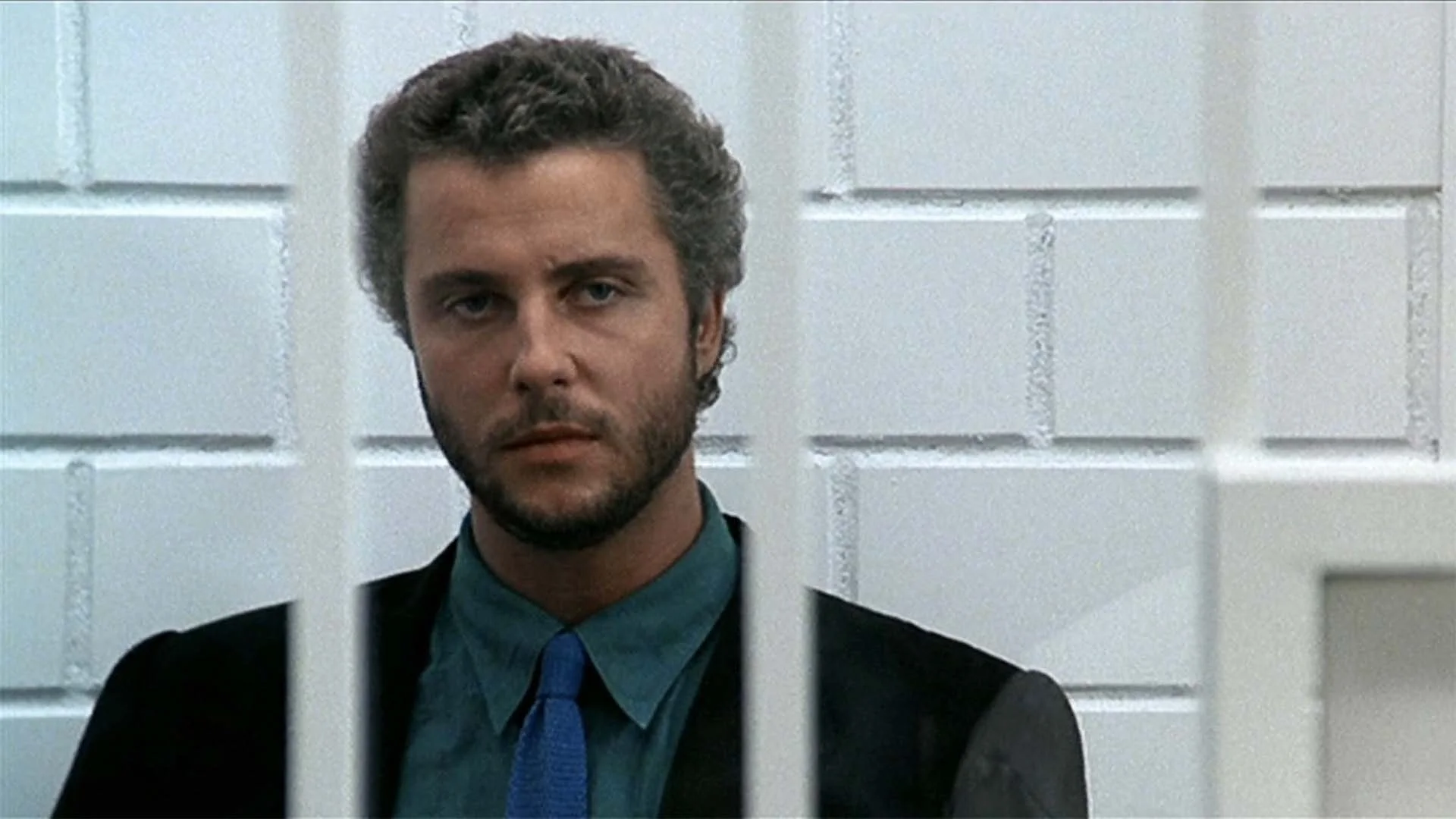
1986 / Dir. Michael Mann
Rating: 4/5
Watch if you like: a 1980s Michael Mann working out a prototype of his masterpiece Heat with a “knockoff” Hannibal Lecter, or the meticulous process of manifesting the daily rage necessary to perform your 9-5, M-F job.
Celebrating its 40th anniversary with a gorgeous 4K restoration and edit, Michael Mann’s Manhunter is still a strange beast. Made before Jonathan Demme’s The Silence of the Lambs and featuring Brian Cox instead of Anthony Hopkins as “the late, great Hannibal Lecter” (here spelled “Lecktor” for some reason), it was a box office bomb upon release and, for fans of the movies or the criminally canceled TV series, remains somewhat of a curiosity. For others, it’s a bona fide cult hit and the best adaptation of a Thomas Harris novel ever made.
Personally, I think Jonathan Demme nailed Lecter and the lurid, gothic pulp crime horror of Harris’s novels in The Silence of the Lambs. However, Manhunter is much more interesting as a Michael Mann film, sitting comfortably alongside his other crime films like Thief and Heat. In adapting Harris’s novel, he strips the plot to its bones, extracting only what interests him and reframing its central detective, Will Graham, as an archetypical Mann protagonist with a code desperate to escape to a paradise they can never quite achieve.
When we meet Graham (William Petersen), he’s literally on a beach, having retired from a career as an FBI profiler after a nearly fatal final job catching Hannibal that left him both physically and mentally destroyed. Though clearly haunted and withdrawn, it doesn’t take much convincing from FBI Agent Jack Crawford (Dennis Farina) to bring him back to help catch The Tooth Fairy, who has brutally murdered two families and will likely kill again before the next full moon.
Unlike the book and other adaptations, Manhunter withholds the Tooth Fairy for the entire first half, focusing on Graham’s attempt to recapture the skill set that allows him to get inside the killer’s mind and, to some degree, mentally become him. Besides a focus on forensic detective work, which clearly paved the way for Petersen’s future career on CSI, it’s a very different type of cat-and-mouse game, with few traditional detective setpieces, amid a focus on a man’s mental battle with himself to embrace the parts of himself he fears most. Even his visit to Hannibal is less a battle of mental wills—Cox plays him more as a straight-up brute—and more for Graham to return to a psychotic world.
Petersen isn’t bad in the role per se, but only a few actors could nail a role this internal on-screen, and he’s either too withdrawn or blurts out blunt dialogue. Mann fortunately supplements, or rather focuses on externalizing, that psychology through his sleek, controlled style, creating an atmosphere that’s rarely chilling but continually uncomfortable and tense. Characters are often framed in tight, geometrical symmetry, or the camera leers from a distance with a pervasive sense of voyeurism and surveillance, all set to blaring, icy synths that sound better than ever after the remaster.
Mann really lets things rip when he introduces Francis Dollarhyde (Tom Noonan), a.k.a. the Tooth Fairy. Mann plays with Noonan’s incredible height, utilizing sets and camera angles that make him and the world around him feel wrong and distorted. Green and red shade his world rather than the steely blues and blinding fluorescents of Graham’s life. As we get closer to the end, Mann pushes even further into an abstract nightmare with looping, intentionally choppy edits and colliding aspect ratios.
Much of Dollarhyde’s backstory is cut from the adaptation, and Mann is far less interested in the killer’s self-mythology. Mann, instead, telegraphs Dollarhyde as a warped double of Graham and another Mann-style character torn between the craft of killing and the possibility of love and acceptance through an encounter with his blind co-worker, Reba (Joan Allen), that his distorted mind literally cannot accept, visualized on screen as seeing things that aren’t there. The film’s implication that Graham, who chooses to abandon “paradise” and leave his family to take the case knowing what it will do to him, is itself another type of psychosis is simply chilling, even if an altered ending from Harris’s book muddles that message. Michael Mann would revisit many of these themes in his masterpiece crime drama, Heat, a decade later.
As it stands, Manhunter still remains a fascinating film and certainly a highlight of 1980s crime films. Michael Mann is a visual stylist like no other, and getting to see a 4K remaster of this movie in a theater is a real privilege that shouldn’t be missed.