
Review: ‘Girls Like Girls’ confidently captures being a teenager falling in love
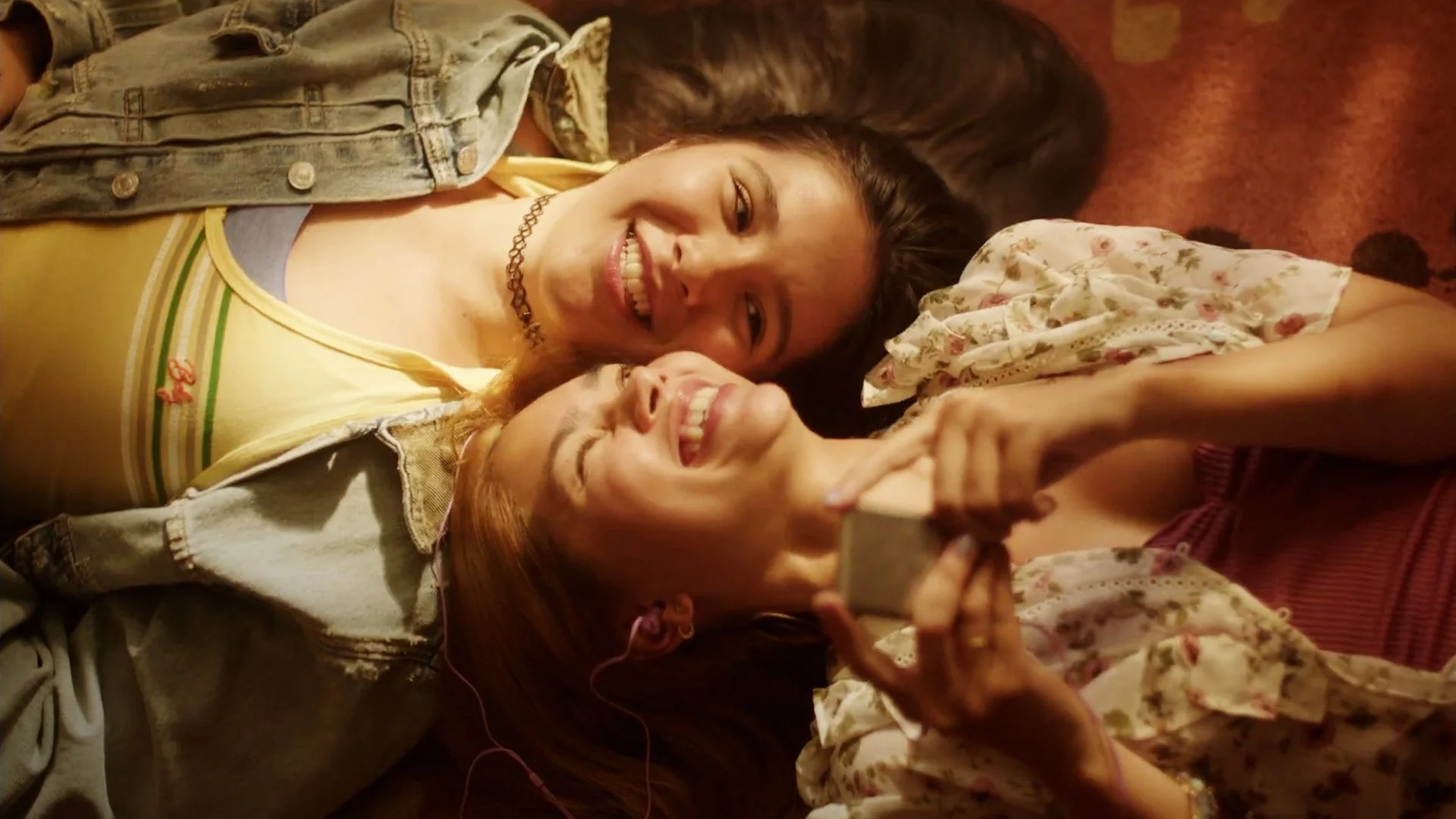
2026 / Dir. Hayley Kiyoko
Rating: 4/5
Watch if you like: the 2015 music video “Girls Like Girls” by Hayley Kiyoko or the 2023 novel adaptation Girls Like Girls by Hayley Kiyoko of the 2015 music video “Girls Like Girls” by Hayley Kiyoko.
Has there ever been a music video turned into a movie? There are so many iconic music videos that create these lived-in worlds that fade away after three minutes. Can you imagine if Michael Jackson and John Landis had turned “Thriller” into a full-length movie? It could have been the biggest hit of the ‘80s. I’ve been racking my brain and coming up with nothing, so Hayley Kiyoko, aka Lesbian Jesus, may be the first person to turn her music video for “Girls Like Girls” into a movie, not to mention a previous novel adaptation.
Maya da Costa makes her debut as Coley, a lonely girl who has moved in with her estranged father (Zach Braff) after her mother’s death, ahead of her senior year of high school. She mostly bikes around the Pacific Northwest, gorgeously photographed by cinematographer Sonja Tsypin to mirror a dreamy 2000s indie Tumblr aesthetic, until she’s taken in like a stray cat by Sonya (Myra Molloy, He’s All That).
Sonya comes from an upper-middle-class, well-adjusted home, has a close group of friends, a mediocre skater boyfriend, and won’t let Coley say no to being her friend. Soon, the two become inseparable, with Sonya ditching her boyfriend to spend more time with Coley, and Coley quickly finds herself falling for Sonya and wondering if this is just the type of ultra close friendship that girls can have with each other or something more. Obviously, it’s something more, but the closer they get, the more Sonya tries to pull away, only to come spiraling back to Coley.
Kiyoko excels at capturing the feeling of being a teenager falling in love. The script has some awkward dialogue, but it kind of works given the situation and doesn’t particularly matter, as Girls Like Girls is often so focused on the tactile experience of young love. The feeling of being touched by your crush, the glances, the camera’s focus on faces and hands. The romance is visually cinematic, but feels absolutely real and grounded.
What’s more is that Kiyoko nails just what it was like to be a teenager in the mid-2000s with such hyper-specificity. We get multiple scenes of Coley behind her chonk of a desktop computer, waiting on AOL Instant Messenger to see if Sonya will log on and talk to her, writing and deleting messages, and the dismay of seeing her log off and Sonya’s away message pop up. Biking around with an iPod, Sonya’s T-Mobile Sidekick, and Mac, and more nuanced needle drops (The Bravery’s “An Honest Mistake”—a bigger Hollywood movie would have just put in “Mr. Brightside” and called it a day) all serve to create this beautiful time capsule of early internet millennials.
A lot of the film’s story elements are common to many coming-of-age movies, but they don’t feel like clichés here. Certainly, a significant part of that is that American studios don’t widely release earnest lesbian love stories for young people ever. If they do come out in our country, they’re likely foreign, slipped into a genre film like Booksmart, or buried in streaming. The closest film that I would compare this to is Lukas Moodysson’s Show Me Love from Sweden in 1998.
Even more than basic representation, Girls Like Girls showcases the importance of elevating a voice like Kiyoko’s to lend the film authenticity rather than soapy stereotypes. I liked how Coley’s sexual orientation is never in question, and there’s no hinge point of coming out to her father or anything like that. She just gets to be who she is, and her journey of realization is related to her parental neglect. When it comes to Sonya, there’s space and sympathy given to her struggle to understand her identity, while avoiding tired debates of whether it’s okay to be gay and making it clear that her struggle with her identity shouldn’t have to come at the expense of Coley’s emotions. There’s much more nuance here than teenagers are usually given.
A smaller, indie romance shouldn’t be the litmus test for whether Hollywood tells more queer stories, but unfortunately, it kind of is. Fortunately, Kiyoko’s debut as a director is a confident, often quite beautiful depiction of queer teens falling in love, well deserving of your precious moviegoing dollars.
Be sure to stick around for a mid-credits scene.